
For decades, Quality Assurance has been defined by the script. Whether it was manual checklists in the early days or the complex Selenium and Cypress frameworks of the last decade, the core task remained the same: a human had to painstakingly define every click, every hover, and every expected outcome.
But as we settle into 2026, the landscape has shifted fundamentally. We are no longer in the era of test automation; we have entered the era of Autonomous QA Agents.
At BOTm, we’ve watched this evolution closely. The shift isn’t just about codeless anymore; it’s about intent-based testing. Here is why 2026 is the year we officially stop writing tests and start prompting goals.
From Scripts to Strategies
In the traditional model, if an application’s UI changed say, a Submit button moved from the left to the right or changed its ID, the test script would break. QA engineers spent 30% to 50% of their time on maintenance, fixing old code instead of testing new features.
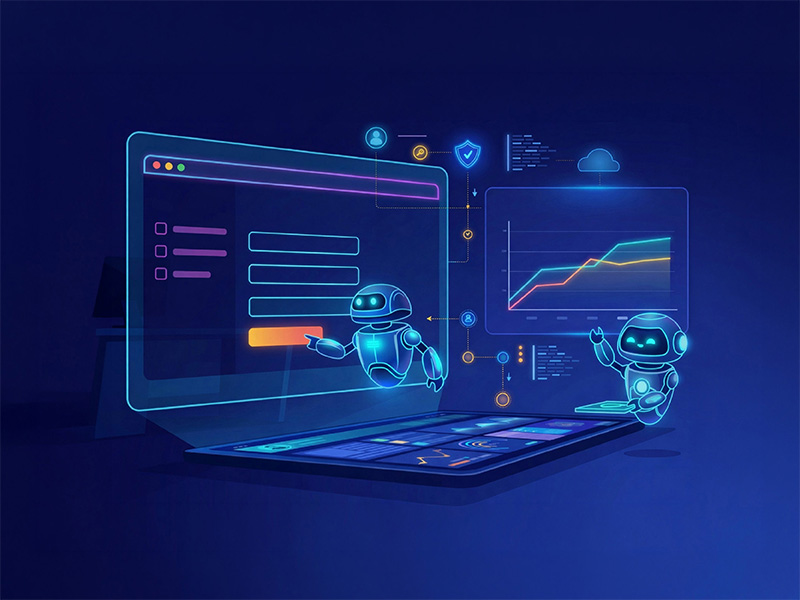
Autonomous QA Agents have changed the math. Instead of telling a tool, the agent understands the goal, crawls the application, identifies the necessary elements using computer vision and LLM-driven reasoning, and executes the path. If a button moves, the agent finds it. If a flow changes slightly, the agent adapts.
The Power of Prompting Your Quality
In 2026, the primary skill of a QA professional has evolved from debugging code to Architecting Intent. Prompting a goal allows for:
- Exploratory Testing at Scale: Agents don’t just follow one path; they explore edge cases that a human might not have time to script.
- Natural Language Requirement Mapping: You can literally feed your Jira stories or product requirements into the system, and the agent generates the testing logic automatically.
- Rapid Feedback Loops: In a world of continuous deployment, waiting hours for a regression suite to run is unacceptable. Autonomous agents can spin up thousands of parallel sessions, testing complex workflows in minutes.
Why BOTm is Leading the Charge
At BOTm, our Codeless Testing Automation platform has been built to bridge the gap between human intuition and machine execution. Our 2026 suite of features focuses on:
- Self-Healing Locators: Gone are the days of brittle tests. Our AI identifies elements based on visual context, not just brittle DOM attributes.
- Autonomous Discovery: Our agents can crawl your latest build and automatically flag UI inconsistencies or broken links before you even write a single prompt.
- Generative Test Data: No more sanitized, boring mock data. Our agents generate realistic, edge-case-driven data to stress-test your application’s logic.
The Human Element in an Autonomous World
Does this mean the end of the QA Engineer? Absolutely not. It means the elevation of the QA Engineer. Instead of being script monkeys, QA professionals in 2026 are Quality Strategists. They focus on the What and the Why, while the Autonomous Agents handle the How. They spend their time analyzing risks, defining complex business logic goals, and ensuring the user experience is delightful, not just functional.
Conclusion: The Future is Here
The transition from writing code to prompting goals is the final hurdle in achieving true Agility. By removing the bottleneck of manual script creation and maintenance, organizations can finally achieve the dream of "Quality at Speed."
Are you ready to stop writing and start prompting?
Explore the future of autonomous testing at botmtesting.com.